

Description
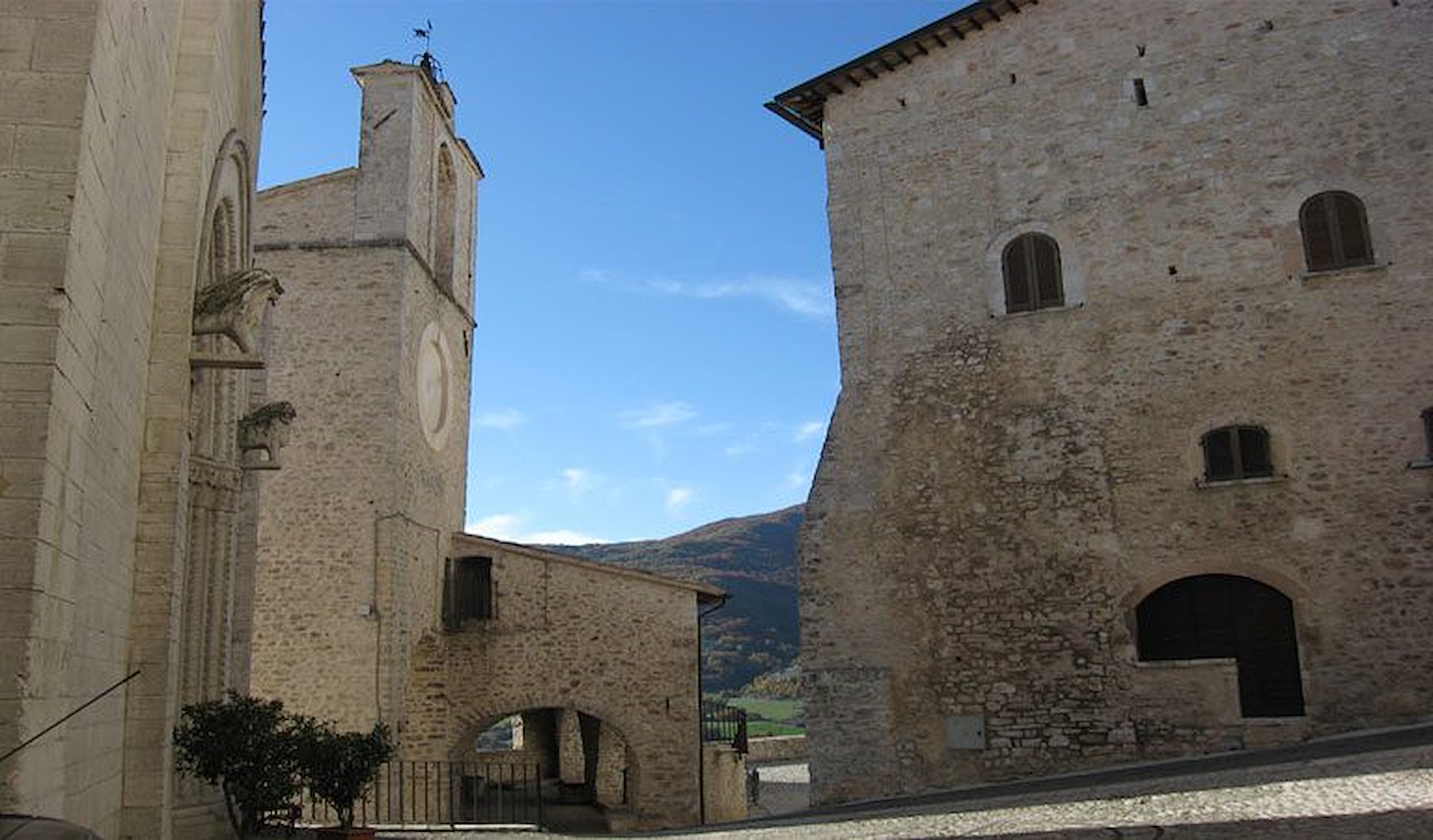
In the twentieth century it is used by a theatre company and then as a cinema. After a long renovation (completed in 2005), it is finally established the "Carlo Innocenzi" public theater with a multi-purpose use. Palazzo dei Priori, the first civic headquarter in the modern age, is on three levels, partly privately and partly public owned. Its name derives from the "communal Priori", the representatives of the people from the first municipal age (XII-XIII Century) to the unification of Italy. In front of three squares, there is an imposing building with a scarp wall and a buttress corner. In the second half of the nineteenth century the municipal institution is transferred to a building next to Palazzo dei Priori (later to Palazzo Rotondi). The building is used until 1964 first by a theatre company, then it is used as a cinema. After years of neglect and the earthquake of 1979, the Municipality starts the works of renovation. In an adjacent space (since 1993 owned by the city) there are paintings and sinopias of XV-XVI century with the family symbol of De Rubeis. After the completion of the work (2005), the multi-functional Municipal Theatre is entitled from 2012 to the illustrious composer of Monteleone di Spoleto, Carlo Innocenzi (1899 -1962).
Palazzo dei Priori is one of the most important historic buildings in Monteleone di Spoleto, as it was the first civic headquarter in the modern age. Placed on the left side that leads to the parish church, it is built on three levels, partly privately and partly public owned, with a body slightly curved and next to important aristocratic dwellings, built in the fifteenth century on a previous defensive structure. The palace is in front of three squares, such as Piazza del Plebiscito (Via del Teatro), Piazza San Francesco and Piazza del Mercato, and looks like a mighty building with scarp walls, with corner reinforcement buttress, made after the famous earthquake of 1703, which brought extensive damage. The architectural facing is characterized by a dense and heterogeneous stone fabric, rustic and compact, originally covered with lime (which left exposed only the door and window rings). On the ground floor there were the shops, wineries and locals open to the square. The first floor, raised, consists of living rooms with access to the road (via del Teatro) where an additional jump and the implantation of an overpass allow the access to the third floor, which belongs to the Municipality.
It owes its name to the "Communal Priori", the figures related to the city government, elected as temporary representatives of the people. Their tasks within the civic territory are subject to numerous reforms, which ranged from the first municipal age (XII-XIII century) until the Unification of Italy. The Land Registry of 1820 (or Gregorian Registry ) indicates the building as town hall, while in the second half of the nineteenth century, the public institution is transferred to an adjacent building, overlooking Piazza del Plebiscito, where it remains stable until 1927, the year of the purchase of Palazzo Rotondi and the consequent transfer of the town hall on Corso Vittorio Emanuele II. The building, from the early Twentieth century to the early years after the Second World War, is used as a venue for a local theatre company, while in 1953, due to the interest of the Cav. Sante Giovannetti, it is used as a cinema, the Cin Cine, which remains active until 1964. In addition to the neglect and the abandonment of the structure for several years, there are the damages after the earthquake of 1979, after which the Municipality starts the restoration works in order to create the new Town Theatre, slowed by the emergence of administrative and litigation issues. At this point, in one of the local private property (acquired in 1993 by the Municipality) tempera paintings and sinopias (preparatory drawings) resurface to be referred to the XV-XVI century. Amongst them, one can notice the following ones: a saint and a penitent on knees, fragmentary inscriptions, fragments of frames and plant motifs, the emblem of the commissioning family De Rubeis or
De Rossi, owner of the building (now partially joined to the nearby Palazzo dei Priori and the Municipal Theatre). The last phase of the recovery of the property interior and construction works starts in 1996 and ends in 2005. The facade and the connecting ramp between Piazza Plebiscito and the entrance of the theater are also redesigned. The interior, pleasant and friendly, is structured according to the canons of the classical theater (providing a stage with curtains, an audience with seats and a gallery above), but giving free rein to a modern taste in the use of form, corrugated and like a zigzag, and in the lights that highlight the movement of structural elements and furnishings. Also equipped with audiovisual equipment for screenings and lectures, the theater hall is the hub of the functional environments associated with it (dressing rooms, ticket office, wardrobe). They are held multipurpose activities, cultural conferences and exhibitions. Since 2012 the town theater is named in honor of an illustrious son of Monteleone, the famous composer Carlo Innocenzi (1899-1962).